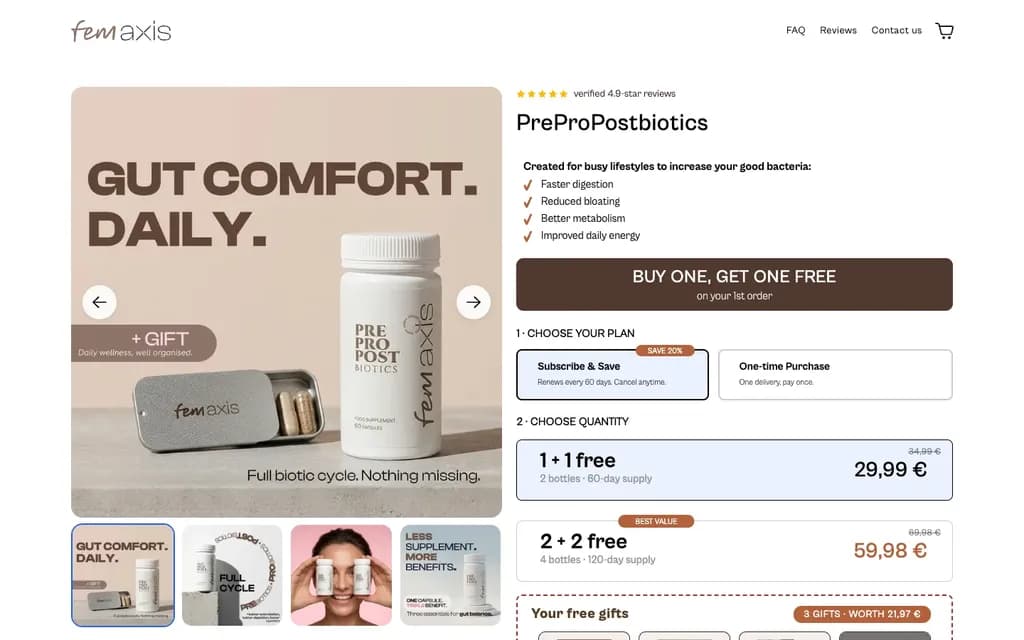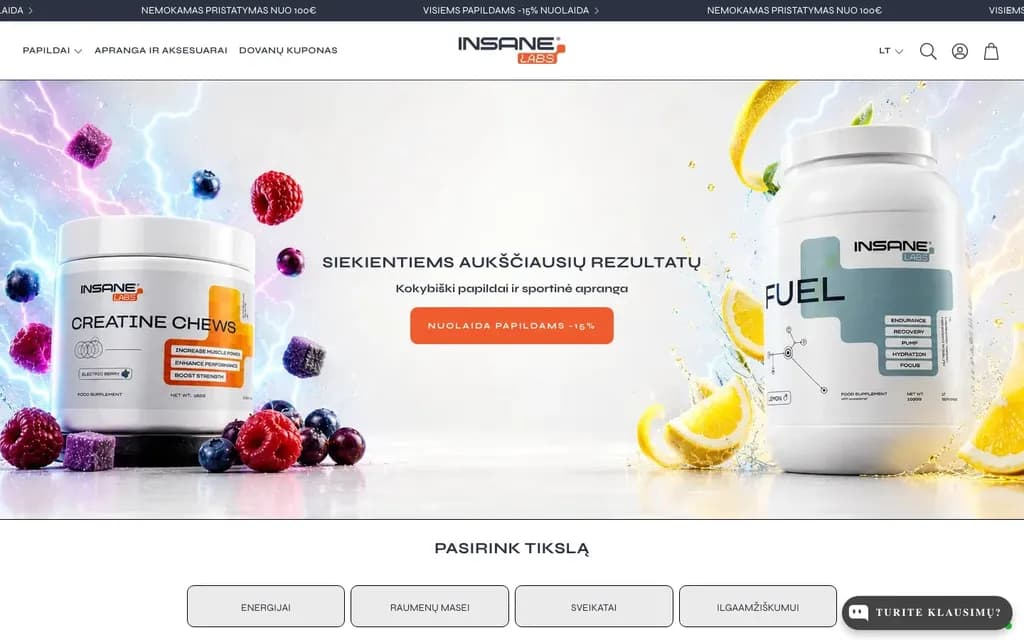


What exactly is Shopify?
Shopify is an e-commerce platform where you can manage products, orders, payments and customer data. Shopify handles hosting, platform updates and infrastructure security, so you do not need to rent a separate server or maintain the whole system yourself.
This reduces the amount of day-to-day technical maintenance. Your theme, apps and integrations still need attention, though. We help make sure they work well together and make the store easy to use for both customers and your team.
Why growing brands choose Shopify
When we build and improve online stores, we hear many of the same needs: manage orders more easily, update content faster and make shopping simpler. Shopify lets teams handle many of these tasks in one admin.
You can add features with apps or custom development. You can start with a ready-made theme, adapt it to your business and build more advanced features later. The key is choosing what your customers and team actually need.
An admin your whole team can actually use
In the Shopify admin, your team can add products, change prices, create discounts, manage orders and process refunds. Many day-to-day tasks can be handled without asking a developer.
When we build a store, we also prepare editable page sections and show you how to use them. That way, you can publish a new offer or collection when you need to, without waiting for a code change.
A convenient checkout for customers
At checkout, customers enter their delivery details and pay for their order. Shop Pay and other supported accelerated checkout options can shorten the process. Available payment methods depend on the country, payment provider and store settings.
Checkout customisation depends on your plan. For example, UI extensions on the information, shipping and payment steps are available to Shopify Plus stores. Before proposing custom features, we check whether they can be implemented on your chosen plan.
Apps for additional store features
Reviews, subscriptions, loyalty programmes, product bundles and cart upsells are common store requirements. Existing Shopify apps can often provide these features, so they do not all need to be built from scratch.
We choose apps based on the features you need, their cost and their effect on store speed. If an off-the-shelf solution is not a good fit, we can build a custom feature or interface. The goal is a clear, useful setup that you can maintain over time.
Customisation, all the way to headless
You can adapt a Shopify theme to your design, create custom page sections and change how products are presented. Metafields and metaobjects can help organise size guides, ingredient information, brand descriptions and other content specific to your store.
If a theme cannot meet your needs, you can build a separate storefront connected to Shopify through its API, often called a headless setup. It offers more flexibility but requires more development and maintenance, so it is best considered when there is a clear need.
AI tools for day-to-day tasks
Shopify’s AI tools can help draft product descriptions, edit images and with other day-to-day tasks. Their usefulness depends on the task, and the results still need review and adaptation for your customers.
For more advanced needs, a store can connect to other tools through APIs. This can automate some repetitive work, such as transferring data or sorting customer enquiries.
Your store and other sales channels
Shopify can be used with Shopify POS in physical stores and connected to other sales or marketing channels. Integrations can help coordinate product, inventory and order data. The available options depend on your market and the systems you use.
If you also sell to business customers, consider Shopify’s B2B features. Before choosing a plan, check which pricing, payment terms and order-management tools your wholesale business needs.
Pricing, and when to consider Plus
Store costs include the plan fee, payment processing, paid apps and any development or maintenance work. The Basic, Grow and Advanced plans differ in features, fees and team access. Choose a plan based on the capabilities you need, rather than revenue alone.
Shopify Plus is worth considering when you need more extensive checkout customisation, complex B2B requirements or multiple stores. Automation alone does not require Plus: Shopify Flow is also available on Basic, Grow and Advanced. Check current features and pricing before selecting a plan.
Migrating from another platform
A move to Shopify needs a plan for transferring products, customer data and order history, connecting integrations and launching the new store. What can be transferred depends on the current platform and the data it holds.
SEO should also be part of the migration plan. We map old URLs to new ones, prepare redirects, move important content and metadata, and check indexing. This helps reduce the risk of losing organic traffic, though search rankings can fluctuate temporarily after a platform change. Read more on our Shopify migration service page.
When Shopify is not the right answer
If your business needs a highly specific checkout, complex pricing or a non-standard order-approval process, first check Shopify’s capabilities and limitations. A more expensive plan or an app will not solve every requirement.
Compare platforms based on total costs and day-to-day operations, including development, integrations, apps, maintenance and future changes. Shopify works well for many businesses, but the right choice depends on how you sell.
Let's pressure-test whether it's right for your brand.
A short, no-obligation call with our team is the fastest way to find out. We'll be straight with you about fit, timeline, and cost.
Start a projectCommon questions
01Is Shopify a good fit for a small or new brand?
Yes. You can start with a standard plan and a ready-made theme, then add features as needed. Before you begin, consider the plan, apps, payment processing and development costs.
02Can Shopify handle selling internationally?
Shopify Markets helps manage store languages, currencies, domains and other settings for different markets. The available features depend on your plan, payment provider and market.
03How much does Shopify really cost?
Consider the monthly plan, payment-processing fees, paid apps and any development or maintenance work. Hosting and platform updates are included in the plan. The total depends on your store’s features and sales volume.
04Is Shopify good for SEO?
Shopify lets you edit page titles and descriptions, manage redirects and publish search-relevant content. Results also depend on your store structure, theme, apps and page speed. Choosing a platform alone does not guarantee high rankings.
05How long does a migration to Shopify take?
It depends on the amount of product and other data, the design, integrations and custom features. After reviewing your current store and the scope, we can propose a migration plan and timeline.

Written by
Povilas Bajarskas
Povilas is the founder of Orebai Digital and a Shopify expert. He and the team build, improve, and migrate e-commerce stores to Shopify.
More about Orebai